Love is the source. Connection is how love is experienced. Creation is what love makes possible.
AmaLume joins two old roots — ama, love, and lume, light. We believe every person carries a divine capacity to connect, create, and love — and that bringing what stands in the way into the light is how healing begins.
Long before children can explain what they feel, they can show it — through figures, sand, blocks, and stories. In play therapy, the child leads and the therapist attends, giving big feelings a safe place to take shape and resolve.
Parents and caregivers stay involved throughout, with regular check-ins about what's emerging and how to support it at home.
Older kids & teens
Teenagers get a seat at the table.
For adolescents, therapy looks less like play and more like a real conversation — one where they're taken seriously, set the agenda with the therapist, and build the confidence to work through what's actually going on.
Specialized private work for women whose worry, overthinking, and self-criticism affect the life and relationships they value most.
The life no one sees
You can look capable and still feel overwhelmed.
From the outside, it may look like you have it together. Inside, the replaying of conversations never quite stops. You anticipate what could go wrong. Rest is hard to reach. You second-guess, self-criticize, and sometimes react in ways that feel bigger than the moment — and the tension follows you into marriage, parenting, work, and faith.
These are highly neurotic patterns — a recognizable cluster of tendencies, not who you are. They tend to persist even in women with real insight, because insight alone rarely reaches where the pattern lives.
There is a way back to yourself.
Rare specialization
Private work for highly neurotic patterns.
Brittany offers specialized, one-on-one therapy for women struggling with highly neurotic tendencies. This private service provides space to explore the patterns that are causing difficulty and work toward changes that matter to you.
High-functioning women are often skilled at hiding the cost of these patterns — which is exactly why generic approaches fall short. The work here is individualized: built around your particular pattern, at your pace, with methods selected for you rather than applied to everyone.
Brittany is certified and trained in Accelerated Resolution Therapy. This service is limited to 2–3 clients per month and has a separate waiting list. Sessions are $500–$700, depending on the time slot.
The private work
What the work does.
01
Understand the pattern
See what triggers it, what reinforces it, and where it actually lives — beneath the surface explanations.
02
Work closer to the source
Methods selected for you — potentially including Accelerated Resolution Therapy where appropriate.
03
Return differently
Meet ordinary uncertainty, emotion, and relationships with greater freedom and choice.
Every client's path is her own — these are the throughlines, not a fixed sequence.
A tool Brittany is trained in
Accelerated Resolution Therapy.
Accelerated Resolution Therapy (ART) is a structured, evidence-informed approach that uses guided horizontal eye movements — similar to the natural movements of REM sleep — while you privately focus on a difficult memory or pattern. You stay fully awake and in control throughout; it is not hypnosis, and you never have to describe details out loud unless you choose to.
Where ART fits a client's needs, Brittany may weave it into the private work. Like all therapy, results vary from person to person.
During a set
You follow the therapist's hand with your eyes while holding the material privately in mind — alert, focused, grounded.
After a set
You pause and notice what shifted. The pace, the depth, and what you share are always your call.
The point of it all
Ordinary life that feels like yours again — mornings, work, people you love — with less noise underneath.
The relational life underneath
Peace changes more than the person who finds it.
When your inner world quiets, there is more room to hear your spouse instead of bracing against him. Less reassurance-seeking. More presence with your children. Repair after tension comes easier — and affection, friendship, play, and rest become reachable again.
This is the purpose and possibility of the work — not a promised result.
Is this the right kind of help?
This work may fit if…
You are highly capable but spend enormous energy managing your inner world
Recurring patterns continue despite real insight
You want focused, private, high-touch work
You are ready to participate honestly and practice outside sessions
This may not fit if…
You need immediate crisis stabilization or a higher level of care
You want a guaranteed rapid cure
You want Brittany to change your spouse rather than examine your patterns
A lower-cost, open-ended weekly model better fits your needs
If you are in crisis or need immediate support, call or text 988 (Suicide & Crisis Lifeline) — available 24/7.
Private consideration
Begin with a private conversation.
Brittany accepts only a small number of new private clients. Share a few basic details and we'll reach out personally when an appropriate opening becomes available.
A separate path
Learning for women.
Practical education about specific recurring tendencies — independent of the private service. A course is never a condition for therapy access, a promise of earlier availability, or a substitute for appropriate care.
The goal is not simply “Does my child have ADHD?” It is: what is happening, why is it happening, and what will actually help?
Choose your path
Three doors in.
Child & adolescent
For attention, executive-function, school, or behavior concerns. Structured tasks that feel more like focused games than tests — parents stay involved, and a teacher adds the school-side picture. Ages .
$895
Adult
ADHD often looks different in adults — chronic overwhelm, time blindness, unfinished projects, hyperfocus. It is not too late for answers that explain a lifetime of patterns.
$895
Not sure yet
Start with the Assessment Consultation. We review concerns and history, and decide together whether comprehensive testing is warranted at all — no pressure toward a bigger evaluation.
$125 — credits toward an evaluation
What you receive
More than a label.
Every evaluation ends with the same four deliverables — the report is the object, but the understanding is the product.
01
A written report
Comprehensive and in plain language: what was assessed, what was found, and what it means.
02
Diagnostic clarity
Whether the evidence supports ADHD — and whether something else better explains the picture.
03
A practical plan
Individualized recommendations for home, school, or work — documentation your school team or physician can use.
04
A results conversation
A sit-down consultation to walk through the findings and decide next steps together.
AmaLume
Assessment Report · Outline
Reason for referral & history
Measures administered
Findings across settings
Differential considerations
Diagnostic conclusion
Individualized recommendations
Next steps & referrals
You are not paying for a stack of tests. You are paying for the whole picture to be gathered, interpreted, explained, and turned into something useful.
The evaluation journey
Five stages, start to finish.
01
Consult
A $125 consultation confirms testing is the right step and which evaluation fits. If we proceed, the fee credits toward the evaluation.
02
Gather
History forms come to you; short questionnaires go to the people who see daily life — a teacher for a child, often a spouse or family member for an adult. Symptoms have to be understood across settings, not in a single office visit.
03
Assess
Roughly 2–3 hours of direct assessment: structured interview plus standardized measures selected for the age and the question — never the same stack for everyone. Portions can often be completed through secure telehealth.
04
Interpret
Scoring, interpretation, and differential review: results are read together, against history and context — and against the look-alikes (sleep, anxiety, learning differences, stress) — rather than treating one score as the answer.
05
Results
You receive the written report and sit down for the results conversation — findings in plain language, recommendations, and what to do next. Report turnaround:
The results conversation
The evaluation isn’t finished when the testing ends — it’s finished when you understand it. The final consultation walks through every finding in plain language and turns it into a plan you can actually use.
Side by side
Which evaluation fits?
Assessment Consultation$125
Child & Adolescent Evaluation$895
Adult Evaluation$895
Complex & Differentialfrom $1,195
Best for
Deciding whether comprehensive testing is warranted, and which type.
Attention, executive-function, impulsivity, school, or behavior concerns. Ages .
Lifelong patterns of overwhelm, procrastination, time blindness, or focus difficulties.
When ADHD may be only part of the picture — overlap with anxiety, trauma, sensory or learning differences.
What happens
Review of concerns, symptoms, history, and functioning; a clear recommendation.
A broader battery selected for the individual — never administered wholesale.
You leave with
A decision and a plan for next steps; the $125 credits toward a scheduled evaluation.
Written report, diagnostic clarity, school-ready recommendations, results consultation.
Written report, diagnostic clarity, practical recommendations, results consultation.
Expanded report and differential review, extensive written recommendations, results consultation.
Direct time
One appointment.
~2–3 hours, with breaks as needed.
~2–3 hours.
Scoped to the question; final pricing discussed before additional assessment begins.
Before you schedule
What to prepare.
Commonly useful materials — we’ll confirm exactly what applies during the consultation:
Any prior evaluations or testing reports
School records or report cards, if relevant
Relevant medical history and current medications
Your main concerns, with real-life examples of where things break down
Contact information for collateral respondents — a teacher, coach, spouse, or family member
Why the rigor matters
No single test can diagnose ADHD.
ADHD is a pattern that shows up across settings and over time — which is why a real evaluation combines clinical history, standardized measures, functional impact, and the observations of people who know you or your child well.
Just as important: several other things can look like ADHD — sleep problems, anxiety, depression, learning differences, and the aftermath of stress or trauma. A careful evaluation considers the look-alikes rather than assuming the first answer.
And if the answer isn’t ADHD? You still leave with answers: what better explains the picture, what to do about it, and where to go next. Clarity is the deliverable either way.
Paying for testing
Utah Fits All Scholarship.
Some assessment or special-education-related services may qualify depending on the student, approved offering, provider status, current award rules, and the Odyssey purchasing or reimbursement workflow. Please confirm eligibility in your current Odyssey account before scheduling or paying — contact us and we’ll help you check.
Assessments are otherwise private-pay. A Good Faith Estimate is provided in accordance with the No Surprises Act, and the $125 consultation credits toward a scheduled evaluation.
Questions families ask.
About the evaluation
Do you diagnose ADHD from one test?
No. There is no single questionnaire that independently establishes an ADHD diagnosis. A comprehensive evaluation considers clinical history, standardized measures, symptom patterns, functional impairment, collateral information, and other conditions that could produce similar symptoms.
What is the difference between a screening and an evaluation?
A screening — at school, at the pediatrician, online — identifies whether symptoms may warrant closer attention. A diagnostic evaluation is broader: it considers history, functional impact, multiple sources of information, diagnostic criteria, and possible alternative or co-occurring explanations. Screening raises the question; evaluation answers it.
What ages do you evaluate?
Children, adolescents, and adults — with age-appropriate standardized tools for each.
How do you distinguish ADHD from anxiety, trauma, sleep problems, or learning difficulties?
By reviewing developmental and clinical history, the pattern of symptoms — when and where they occur — their functional impact, and relevant standardized measures. When the question is more complex, a broader differential evaluation may be recommended.
What is a complex or differential evaluation?
The right choice when ADHD may overlap with other concerns, or when previous treatment or diagnoses haven’t adequately explained the picture. The battery is selected for the individual rather than administering every available test — and exact measures and final price are discussed before additional assessment begins.
Does every evaluation end in a diagnosis?
No. Findings may support ADHD, another explanation, overlapping concerns, or no diagnosis at all. The evaluation is designed to answer the question as accurately as possible — not to arrive at a predetermined conclusion.
What if it turns out not to be ADHD?
Then the evaluation has done exactly its job. You’ll leave knowing what better explains the difficulties — whether that’s anxiety, sleep, learning differences, or something else — along with recommendations and referrals for it. No result is a dead end.
Is it worth being evaluated as an adult?
Yes. Many adults were never evaluated as children, especially women and high-achievers who compensated for years. A clear answer — either way — can explain lifelong patterns and open the door to strategies, accommodations, and, where relevant, medical treatment.
Process & deliverables
What is included in the quoted fee?
The full arc of the evaluation: the clinical interview, the selected standardized measures, collateral collection and review, scoring and interpretation, the written report, and the results consultation. For complex evaluations, anything that would add cost is discussed and approved before it begins.
How much time does testing take?
Direct assessment typically takes 2–3 hours, depending on age, presenting concerns, and the measures selected. Total calendar time also includes forms, collateral responses, scoring, interpretation, report writing, and the results consultation.
How long until the written report is ready?
Report turnaround: Missing forms or collateral responses can extend the timeline, so returning materials promptly keeps things moving.
What happens during the results consultation?
Brittany explains the findings in plain language, answers your questions, reviews the recommendations, and discusses appropriate next steps — for home, school, work, or further care.
Who sees the results?
You do — and for a child, the parents or guardians. Results are released to anyone else (schools, physicians) only with your written consent, and records are maintained in accordance with applicable law. Please don’t send sensitive clinical details through the general website form; the secure intake process is where that belongs.
School & family
Why do you need information from teachers or family?
ADHD symptoms and impairment are evaluated in context. For children, information from home and school shows whether concerns appear across settings. For adults, a spouse or family member familiar with daily functioning adds a perspective no office visit can capture.
My child was already screened at school. How is this different?
A school screener flags the possibility of attention concerns. A diagnostic evaluation establishes — or rules out — the diagnosis, considers what else could explain the picture, and produces a written report with individualized recommendations.
Will the report help with an IEP or 504 process?
The report provides useful clinical documentation and recommendations, written with school use in mind. Schools make their own eligibility and accommodation decisions through their required processes — an outside diagnosis or recommendation informs that process but doesn’t guarantee an IEP, 504 plan, or a particular accommodation.
Can my physician use the report for a medication conversation?
Yes — you may share the report with any medical provider you authorize, and it gives them exactly the documentation that conversation needs. Brittany is a therapist, not a physician, and does not prescribe; medication decisions remain with the prescribing provider.
How should I prepare my child?
Keep it simple and positive: “We’re going to meet someone who helps us understand how your brain works best.” Normal sleep, meals, and any current medications as usual unless we discuss otherwise — and bring glasses or hearing aids if they’re used.
Payment & logistics
Is testing virtual or in person?
Many portions can be completed through secure telehealth; some situations require or benefit from in-person assessment — we’ll confirm what fits during scheduling.
Can you evaluate someone outside Utah?
Evaluations are provided to clients located in Utah.
How does payment work?
Assessments are private-pay by card. A Good Faith Estimate is provided in accordance with the No Surprises Act.
Is the $125 consultation credited toward testing?
Yes — if a comprehensive evaluation is recommended and scheduled, the $125 consultation fee is applied toward the full evaluation fee.
When could the quoted price increase?
Only in complex evaluations, where additional measures may be recommended based on the question presented — and the final scope and pricing are approved by you before any additional assessment begins. The $895 evaluations are flat-fee.
Can we use the Utah Fits All Scholarship?
Some assessment or special-education-related services may qualify depending on the student, approved offering, provider status, current award rules, and the Odyssey purchasing or reimbursement workflow. Please confirm eligibility in your current Odyssey account before scheduling or paying — and we’re glad to help you check.
Clarity, then a path forward.
Start with the $125 Assessment Consultation — one appointment to decide the right next step. If a full evaluation makes sense, the fee credits toward it.
The Course Collection
Understanding, worth returning to.
Practical psychology for the life you are living — built for one defined situation at a time, with a plan you actually use.
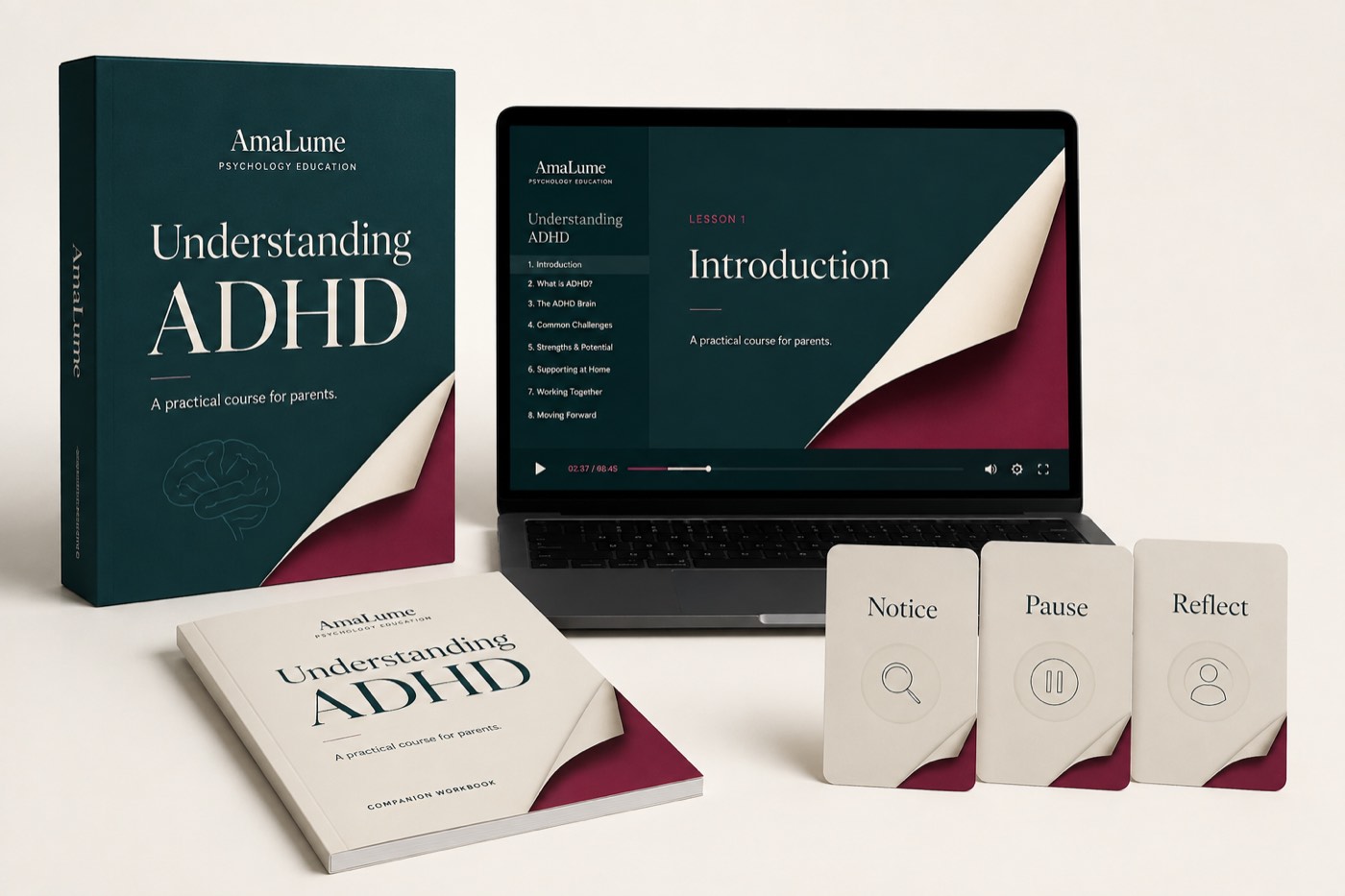
Online courses and downloadable resources · devices and printed materials shown for illustration
For parents — first course
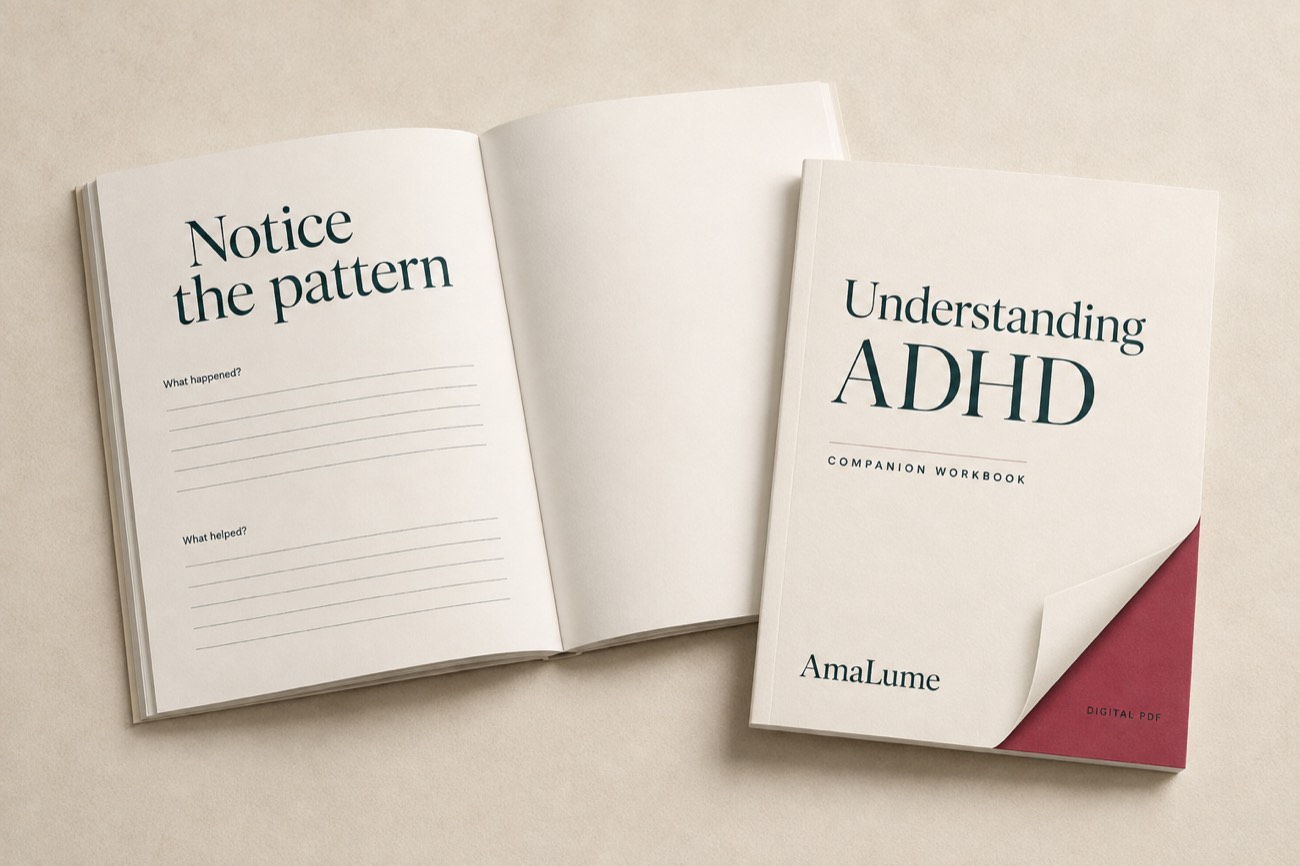
Understanding ADHD.
Explore the core features of ADHD and practical strategies that support focus, emotion regulation, and everyday success — at home and at school.
AmaLume joins two old roots — ama, love, and lume, light. This page is what those words mean to us.
Love is the source. Connection is how love is experienced. Creation is what love makes possible.
Light helps people see what is interfering with those sacred capacities.
The Heart of AmaLume
Three sacred capacities.
AmaLume is built around three sacred capacities: Connection. Creation. Love.
We believe these are more than psychological needs or desirable outcomes. They are attributes of the Divine.
God creates. God connects. God loves.
We believe something of that divine pattern has been placed within every human soul. As people heal, they become more able to participate in it: to form meaningful connections, create something good from what they have been given, and love God, themselves, and the people around them more fully.
This is the deeper purpose behind AmaLume.
Connection
We were created for relationship.
Connection allows us to know God, understand ourselves, belong to one another, and experience life as something shared rather than merely managed.
Disconnection can appear in many forms. It may look like anxiety, criticism, withdrawal, isolation, constant performance, difficulty trusting, or the feeling that no one truly knows us. It can exist inside a family that looks close, a marriage that continues to function, or a life filled with people.
Healing helps restore our ability to be present, honest, known, and connected. AmaLume exists to strengthen connection between spouses, parents and children, individuals and their communities, people and their own internal world, and, when desired, people and God.
Creation
God is a Creator.
Creation brings order, beauty, meaning, and possibility into what may initially feel chaotic, empty, or unfinished. We believe people possess a God-given capacity to participate in that work.
We can create new ways of responding. New patterns within a marriage. New experiences inside a family. New understanding from a diagnosis. New meaning from something painful. New possibilities for a life that has felt trapped by the past.
Therapy should do more than explain what happened. It should strengthen a person's ability to create what comes next.
At AmaLume, clients are active participants in their own lives. Their agency matters. Their decisions remain their own. The purpose of our work is to help them see more clearly, understand more deeply, and become increasingly capable of creating something good with what they have been given.
Love
God is love.
Love recognizes worth before performance. It sees a soul where the world may see a symptom, behavior, diagnosis, identity, or problem.
Love makes room for honesty. It respects agency. It tells the truth with tenderness. It remains curious about the person in front of us and refuses to turn them into a category or project.
Love does not require us to erase meaningful differences or pretend that agreement exists where it does not. It allows people to meet one another with dignity, courage, compassion, and truth.
At AmaLume, love is the posture from which the work begins and the measure of what that work ultimately produces.
Why light matters
Light is not the final destination.
The name AmaLume brings together love and light. Light helps us see what has been hidden, misunderstood, or difficult to name. It reveals the patterns interfering with connection, the pain limiting our ability to create, and the fear making love more difficult to receive or express.
We bring things into the light so people can connect more deeply, create more intentionally, and love more fully.
Every AmaLume service, assessment, course, resource, and future clinician is measured by three questions:
Does this deepen meaningful connection?
Does this strengthen someone's ability to create something good?
Does this increase their capacity to give and receive love?
Bring it into the light. Restore connection. Create what comes next. Love more fully.
Why AmaLume exists
Beyond labels and coping tools.
Mental-health care is often organized around what has gone wrong. People receive labels for their symptoms and tools for managing distress — but far less help understanding what is happening beneath the surface, or strengthening the life, marriage, family, and relationships they still deeply value.
AmaLume begins somewhere different: with the life and relationships a person wants to strengthen.
Two doors into AmaLume
Heal what hurts. Strengthen what matters.
Something hurts and needs healing — trauma, anxiety, neurotic patterns, disconnection, difficult behavior, or an internal life that has become painful to inhabit.
Or something matters and deserves strengthening — a marriage, a child, a family, a faith. A good life has been created, and you want to protect it, deepen it, and experience more joy inside it.
AmaLume was built for both.
01
Illuminate
Bring what is hidden, confusing, or painful into the light.
02
Understand
Look beneath the symptom to the story, need, fear, and pattern — without shame.
03
Reconnect
Restore connection with yourself, God, and the relationships that have grown distant.
04
Create
Use clarity and agency to create new responses, new patterns, and a meaningful way forward.
05
Love
Carry the change into everyday life — presence, courage, truth, compassion, and joy.
The therapist behind AmaLume
Brittany Allred, LMFT.
AmaLume began in Brittany's office — in the pattern she kept noticing among capable women, in years of work with children and families, and in the belief that people carry a divine capacity to connect, create, and love.
Helping children, women, and families understand what is happening beneath the surface — and find a meaningful way forward.
I work with children who need a developmentally appropriate way to communicate, families searching for clearer answers, and capable women who have learned how to hold everything together while quietly falling apart inside.
Although those needs may look different, the question at the center of my work is usually the same:
What is really driving this — and what will create lasting change rather than temporary relief?
How I found this work
My path wasn't completely linear.
Before becoming a therapist, I studied accounting and business, explored education as a possible career, and spent three years working directly with children in a private-school setting. I also worked as a private tutor and studied abroad in Scotland through an upper-division business program.
I was drawn to education because I loved helping people learn and grow. But I also became frustrated by how difficult it could be to create meaningful change inside large systems. Marriage and family therapy gave me the opportunity to work more directly — with individual people, their relationships, and the patterns shaping their everyday lives.
I earned both my bachelor's degree in psychology and my master's degree in marriage and family therapy from Utah Valley University.
The work that became deeply personal
Capable on the outside. Miserable on the inside.
Over time, I began noticing a recurring pattern among some of the women entering my office.
They were capable, intelligent, conscientious women. Their children were cared for. Their homes and responsibilities were handled. Many had successful husbands, friendships, communities, and lives that appeared good from the outside.
But internally, they were miserable.
Some had been treated for anxiety, OCD, ADHD, trauma, or other legitimate concerns. Those frameworks could be helpful, but they did not always explain the entire experience: the constant evaluation of whether life was good enough, whether relationships felt connected enough, what might go wrong, and what needed to be fixed next. Their minds could find the imperfection in almost any moment — even a good one.
As I began addressing neurotic tendencies more directly, rather than treating them only as a secondary symptom, I began seeing meaningful movement. Women became more confident in their ability to manage their internal world. Relationships with children improved. Marriages became more connected. Women who had built objectively good lives began learning how to actually inhabit and enjoy them.
That work has become one of the most frequently referred areas of my practice.
My work is strongly influenced by Adlerian theory: a strengths-based approach centered on belonging, relationships, contribution, and finding a meaningful place in the world.
I also draw from trauma-informed care, Accelerated Resolution Therapy, play therapy, Positive Discipline, ADHD-affirming assessment, and relational principles found in Emotionally Focused Therapy and the Gottman Method.
I do not believe therapy should simply give you another collection of techniques to perform correctly. The goal is to understand the pattern beneath the struggle, build confidence in your ability to respond differently, and help you experience greater connection, freedom, and enjoyment in your actual life.
Beyond the office
I am a wife, a mother, and someone who genuinely values family life. I love learning, hiking, camping, being outdoors, and spending time with the people I love.
Connection is not only a clinical concept to me. It is something I believe we were created for — and something I am continually learning to practice in my own relationships, responsibilities, and everyday life.
Training & Credentials
Licensed Marriage and Family Therapist, State of Utah
M.S., Marriage and Family Therapy — Utah Valley University
B.S., Psychology — Utah Valley University
Certified and trained in Accelerated Resolution Therapy
Certified ADHD-Affirming Assessor
Certified Positive Discipline Educator
Training and certification in Exposure and Response Prevention
Extensive training and clinical experience in play therapy
Additional training in Adlerian theory and therapeutic approaches
Three years working with children in a private-school setting
Who this work is for
Therapy does not have to begin after everything falls apart.
Sometimes it begins with a good life you want to protect, a marriage you want to strengthen, a child you want to understand, or a joy you know should be easier to feel.
My work may be a good fit for you if:
You are capable, responsible, and outwardly successful, but your mind continually finds the next problem to solve
You hold your family together while privately feeling anxious, dissatisfied, disconnected, or exhausted
You care deeply about your marriage and want to understand the patterns you bring into it
You want greater connection with your children, not simply better compliance from them
You want to understand what is beneath a child's behavior before deciding how to respond
You are seeking an assessment that gives you useful understanding and direction, not merely another label
You have experienced trauma that continues to affect your emotions, relationships, or ability to feel safe
You want therapy to help you build confidence and agency rather than become dependent upon therapy
You want to experience more gratitude, connection, and joy in the life you already have
You are wrestling with honest questions about faith, identity, sexuality, relationships, or your future — and want room to explore them without being pushed toward a predetermined conclusion
I am especially drawn to people who care deeply about their relationships and the kind of life they are creating. They may not be in crisis. They may simply recognize that something important could be healthier, more connected, or more deeply enjoyed.
People are more than categories
You do not have to believe what I believe.
I work with people whose backgrounds, beliefs, identities, relationships, and experiences may be very different from my own. I will not reduce you to a category, treat you like a political question, or make you into a project.
I am open about being a Christian. My relationship with Jesus Christ shapes how I understand human worth, agency, connection, truth, and love. My convictions are visible, but agreement with them is not the price of admission.
My role is not to recruit you into my worldview or make important decisions for you. It is to help you understand yourself more clearly, recognize the patterns shaping your life, consider choices and consequences honestly, and move forward with greater confidence and agency.
If faith matters to you, it is welcome in our work. If you believe differently than I do, your beliefs and experiences will be treated with respect. We do not have to begin from the same place to do honest and meaningful work together.
I can care deeply about you without pretending we are the same. I can be honest about who I am without making you into a project.
The story behind the name.
AmaLume is bigger than one therapist — it's built on Connection, Creation, and Love.
If you are in crisis or need immediate support, call or text 988 (Suicide & Crisis Lifeline), available 24/7 — this form is not monitored around the clock.
Good to know
Practical details.
Location & telehealth
Based in Utah County, Utah. Telehealth availability:
Costs, in writing
Services are private-pay, with fees listed plainly on each service page. A Good Faith Estimate is provided in accordance with the No Surprises Act.
Your privacy
Contact messages are handled confidentially. Clinical records, once care begins, are maintained under applicable law — and released only with your written consent.
Online Course · For Parents
Understanding ADHD.
A practical course for parents — explore the core features of ADHD and strategies that support focus, emotion regulation, and everyday success at home and at school.
Digital course, in development. Dates, price, and refund terms announced before enrollment opens.
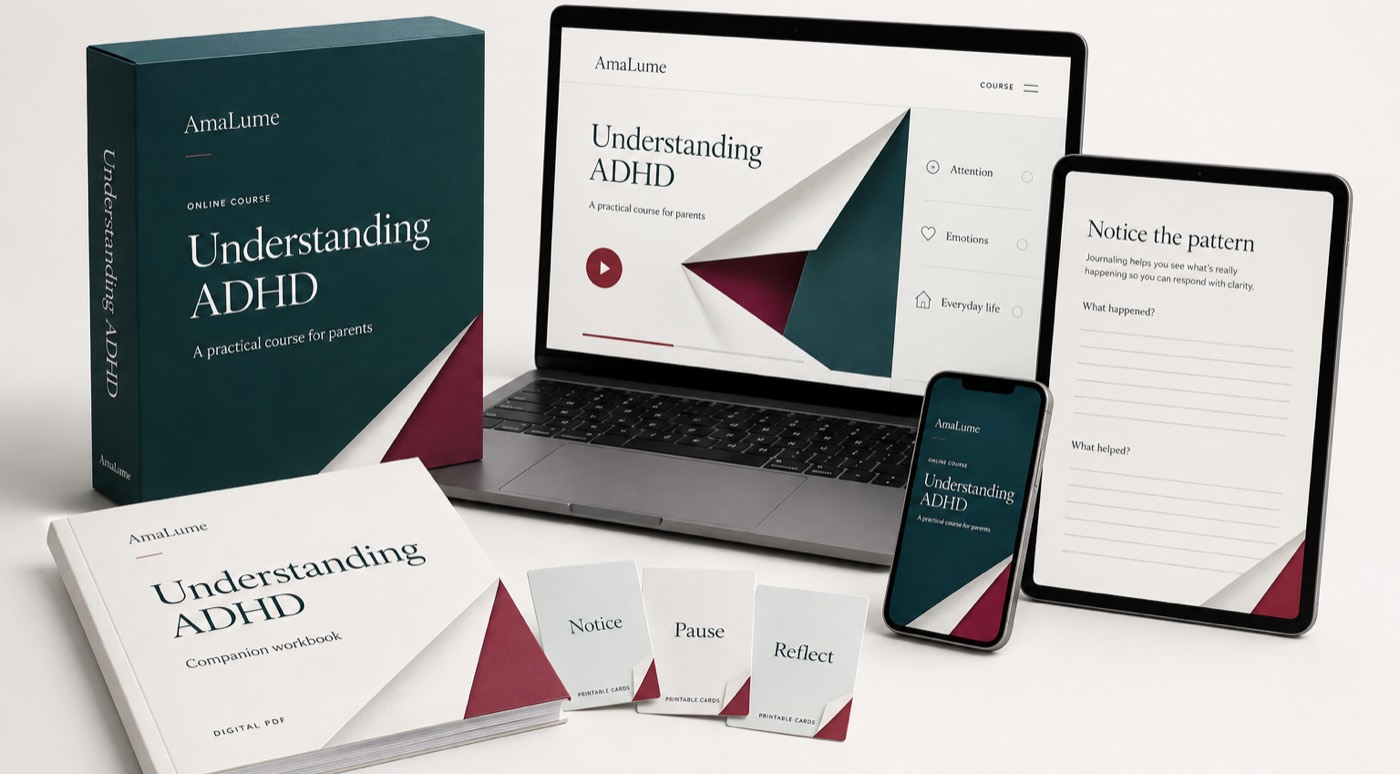
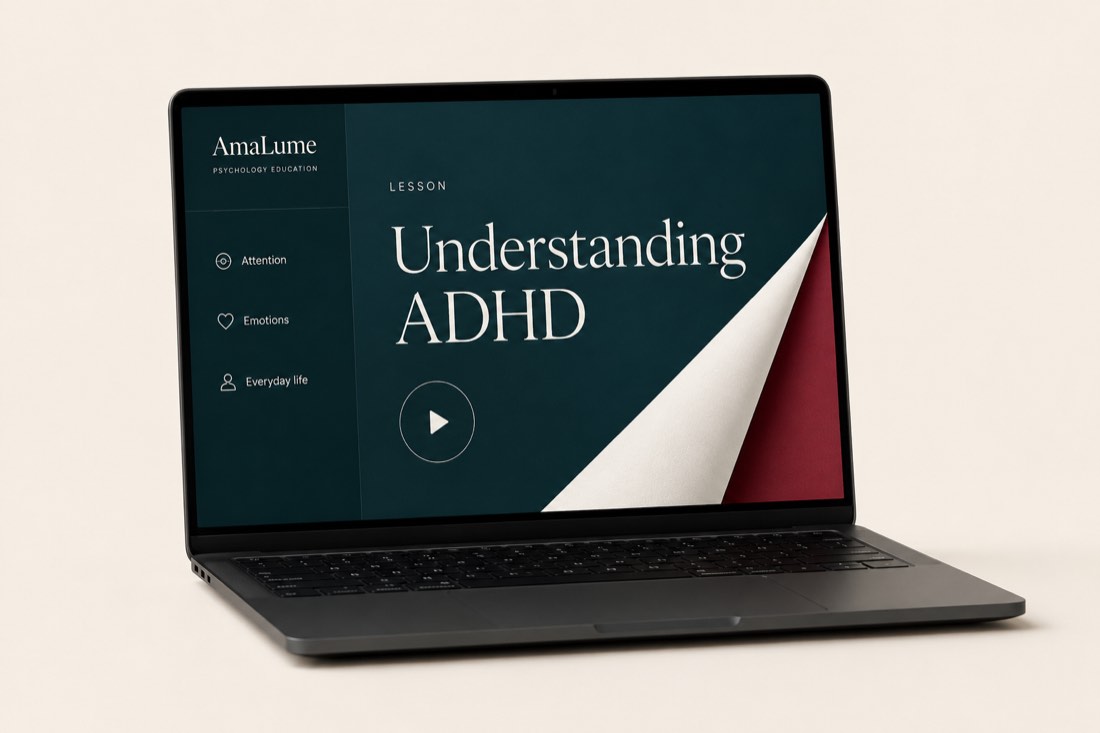
Digital course and downloadable materials · devices and printed items shown for illustration
The Lessons
Eight short lessons, built for real life.
Introduction
What is ADHD?
The ADHD Brain
Common Challenges
Strengths & Potential
Supporting at Home
Working Together — school, therapists, and your team
Moving Forward — your family's plan
Short, focused videos with clear explanations — watch in any order, return anytime.
Beyond the lessons
Workbook & practice cards.
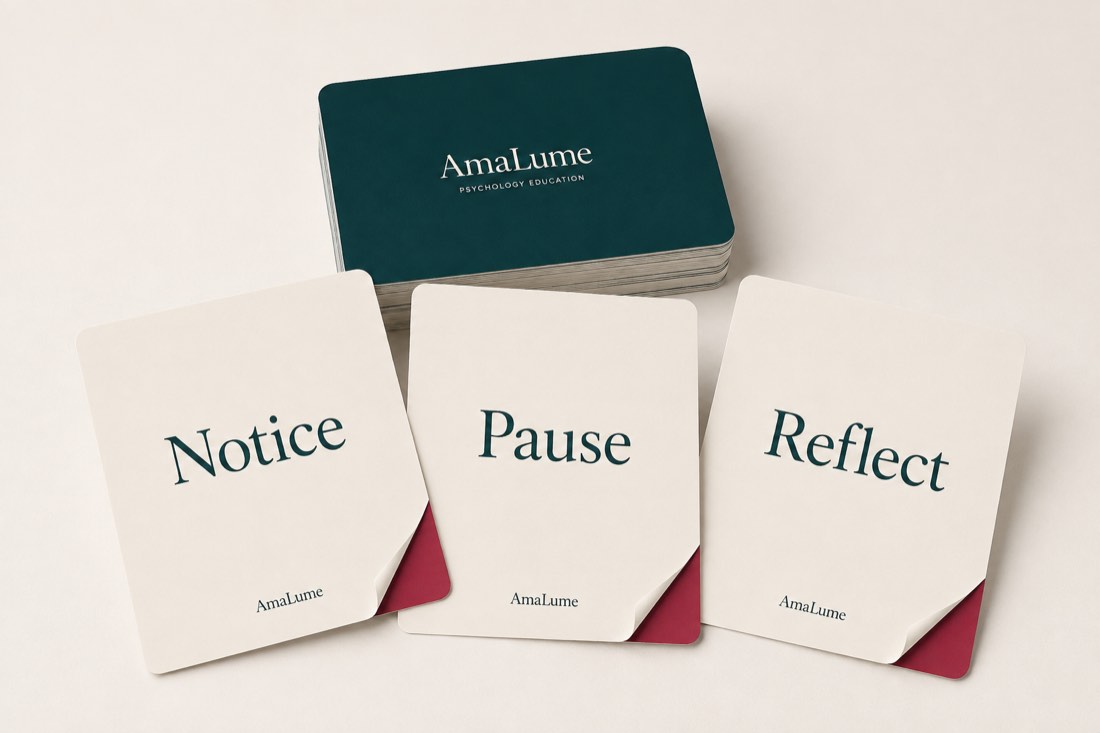
A companion workbook (digital PDF) turns each lesson into reflection and practice for your child and your home — and printable Notice / Pause / Reflect cards carry the course into the moments between lessons.
Is this course for you?
It fits if…
You're parenting a child or teen with ADHD — diagnosed or suspected — and want practical understanding, not another lecture.
It pairs well with…
An ADHD assessment, before or after. The course explains; testing clarifies. About testing
It is not…
Therapy or a diagnosis. Education supports — and never replaces — appropriate care.
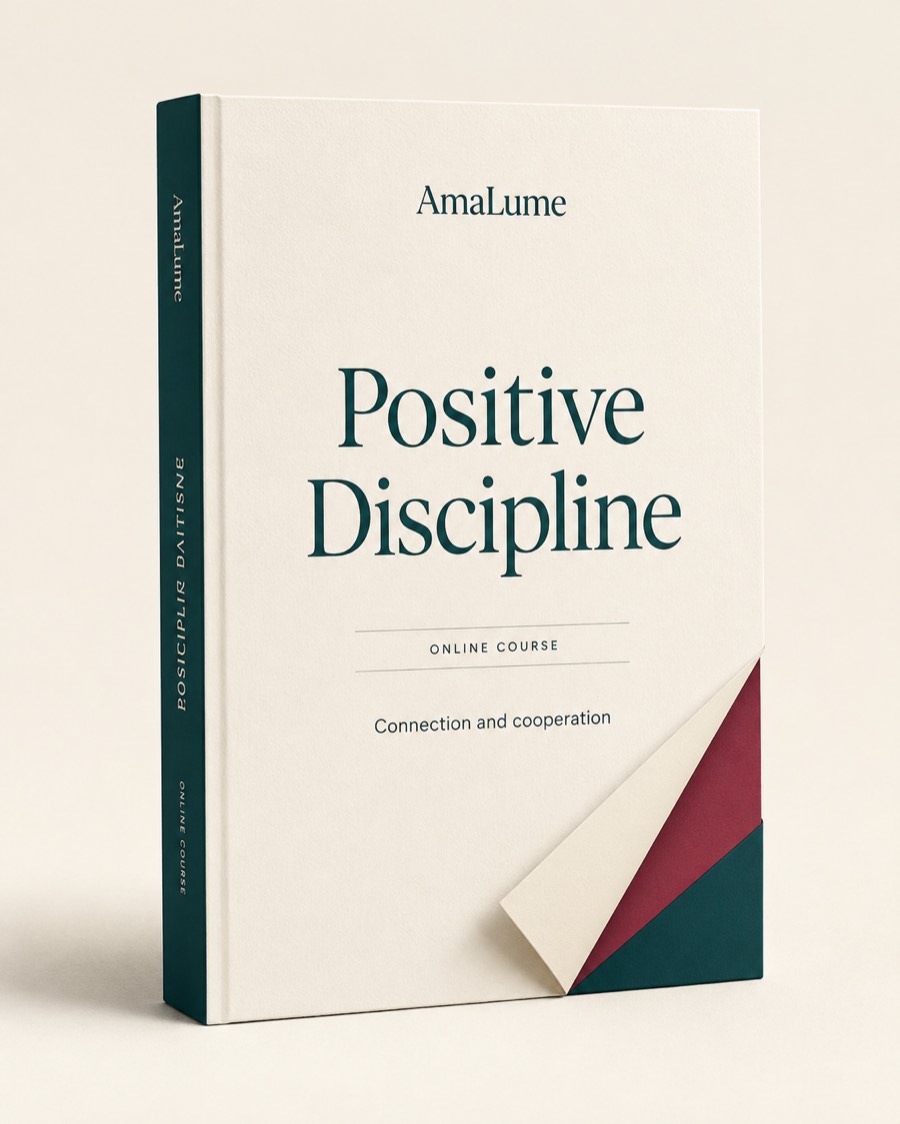
Connection and cooperation — practical tools that work in real family life, without the yelling-then-guilt cycle.
One routine. Real change.
Choose one daily routine that isn't working — mornings, homework, bedtime. Learn a small set of relevant principles, practice with scenarios that match your home, and finish with an action plan for that routine.
Clear lesson schedule, a suitable practice exercise for each step, and exactly defined feedback access.
In development — register interest and we'll tell you when pilot dates, price, and terms are set.
Online Course · For Women · In Development
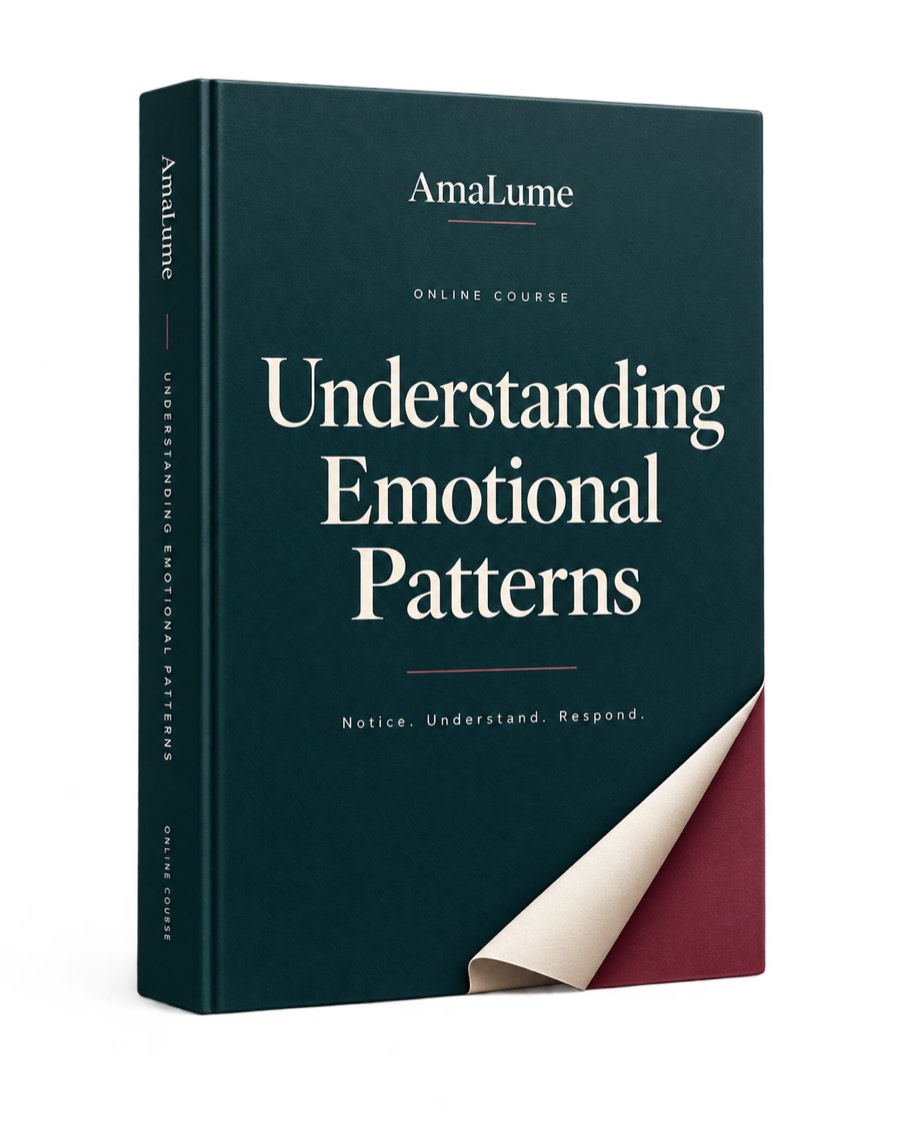
Understanding Emotional Patterns.
Notice. Understand. Respond. Recognize the patterns that keep repeating, build insight into where they come from, and respond with greater confidence.
Practical education, made personal.
Built around one recurring pattern you choose — focused teaching, a suitable practice exercise, reflection, and a usable personal plan. Distinct from therapy, and never a condition or substitute for it.
The Journal is education. It is not therapy, an assessment, or advice about your specific situation, and reading it does not create a therapeutic relationship. If you are in crisis, call or text 988 (Suicide & Crisis Lifeline) — it is free and answered around the clock.
The Journal · September 2026
You built a good life. Why can't you feel it?
On the women who hold everything together, the checklist that worked, and the feeling that never followed.
Brittany Allred · Marriage & Family Therapist · 6-minute read
You did the things. You worked hard, kept your word, showed up for people. The house is warm, the children are loved, the career is respectable, the holidays get planned and actually happen. If a stranger described your life back to you, you would have to admit it sounds good — because it is good. You built it.
And yet there is the 5 a.m. tightness in your chest before anyone needs anything from you. The mind that will not stop rehearsing conversations. The strange flatness on days that should feel sweet. The sense of being one dropped ball away from everything unraveling — held off only by never dropping a ball.
If that's familiar, I want to start with the sentence you may have said to no one: “I have no right to feel this way.”
It isn't ingratitude
The women I work with are almost never ungrateful. They are usually the most conscientious person in every room they enter — the one others hand things to because she handles them. Gratitude isn't the missing piece. The missing piece is that somewhere along the way, peace became something that had to be earned, and the earning never ends.
Competence is wonderful, and it also makes an excellent hiding place. When you are the one who holds it together, nobody checks on you — including you. The better you perform, the less visible the cost becomes, until the only person who knows how loud it is inside is the one who can't say so, because saying so would mean not handling it.
The checklist worked. The feeling was supposed to follow. When it doesn't, the answer is not a longer checklist.
The rule underneath
Patterns like this aren't character flaws, and they aren't an identity. They are usually old rules — rest must be deserved; love is kept by being useful; if I am ever less than fully reliable, something important will be lost. Rules like these were learned early, and here is the part that deserves respect: they were solutions. At some point in your story, being the capable one, the good one, the one who never needed anything — that worked. It secured belonging. It kept things steady. It made sense.
A rule that once worked doesn't get questioned. It just keeps running — long after the situation it solved is gone, long after the cost has outgrown the benefit. Now it runs your mornings.
A rule that outlived its job — the shape of most exhausting patterns.
What change actually is
Change, in this kind of work, is not becoming a different person. You don't lose the capability, the care, or the standards — those are yours. Change is finding the rule, understanding what it was originally for, and deciding — as the adult you are now — whether it still needs to be enforced. Most of the time, it doesn't. It just never came up for review.
That is slower than a coping technique and deeper than a pep talk. It is also the difference between managing a life that looks good and inhabiting one that feels like yours. Understanding changes what comes next — and your mind can become a quieter place to live.
This essay is education, not therapy or advice about your specific situation. If you are in crisis, call or text 988 (Suicide & Crisis Lifeline), free and answered around the clock.
Marriage & Family Therapist — helping children, women, and families understand what is happening beneath the surface, and find a meaningful way forward.
Neuroticism or perfectionism? Why the difference matters.
Two words we use interchangeably — and the very different kinds of help each one actually needs.
Brittany Allred · Marriage & Family Therapist · 5-minute read
“I'm such a perfectionist.” “I'm just neurotic about it.” In everyday conversation the two words point at the same picture: someone wound tight, hard on herself, unable to let things be. But they name different things — and if you're trying to change, the difference decides what kind of work will actually help.
One is weather. One is policy.
Neuroticism, as psychologists use the word, is a temperament trait — a measure of how quickly and how strongly a person's internal alarm system responds, and how long it takes to settle. It is not a diagnosis and not a disorder; it's one of the basic dimensions along which all of us vary, like introversion. Someone higher on this trait feels stress sooner, feels it harder, and carries it longer. That's the weather she was born into.
Perfectionism is not a temperament. It's a strategy — a learned policy about how to stay safe, worthy, or loved: if my performance is flawless, I can't be criticized, rejected, or found out. Nobody is born with it. It gets built, usually early, usually because at some point it genuinely worked.
You can renegotiate a policy. You cannot cancel the weather — but you can completely change your relationship to it.
Why the difference decides the work
Mix the two up and you get the two classic dead ends. Treat a learned strategy as if it were inborn temperament, and you get resignation: “this is just how I am,” said about something that is actually a rule you could examine and retire. Treat temperament as if it were a strategy, and you get self-blame: “just lower your standards, just relax” — advice that fails, because a sensitive alarm system doesn't respond to instructions, and each failure gets read as further proof that something is wrong with you.
The strategy work is about finding the rule, understanding what it once protected, and updating it. The temperament work is about knowing your own nervous system honestly — what sets it off, what settles it, what it's like to stop treating its false alarms as facts — and building a life that works with it rather than against it.
They usually travel together
The knot — from inside it feels like one thing. It's two strands, feeding each other.
Here's what makes this genuinely tricky: a sensitive alarm system makes perfect performance feel like the only reliable safety. So the trait recruits the strategy, the strategy exhausts the person, and the exhaustion sensitizes the alarm. From inside, it all feels like one thing — “this is just me.” It isn't. It's a knot with two different strands, and untangling them — in your particular life, with your particular history — is precisely the kind of thing careful therapeutic work is for.
You don't have to arrive knowing which one you're dealing with. That's the first thing we'd figure out together.
This essay is education, not therapy, an assessment, or advice about your specific situation. Trait language here describes normal human variation, not a diagnosis.
Marriage & Family Therapist — helping children, women, and families understand what is happening beneath the surface, and find a meaningful way forward.
The high-performing marriage nobody realizes is in trouble.
Not a statistic — a pattern. When a household runs beautifully and a marriage quietly runs out.
Brittany Allred · Marriage & Family Therapist · 5-minute read
I want to be careful about what this essay is. It isn't research, and I'm not going to give you statistics. It's a pattern — one I see from a particular vantage point: working with capable women, one at a time, on the patterns running underneath their own lives. The marriage comes up. It almost always comes up.
What it looks like from the outside
From the outside, this marriage is doing great. The calendar runs. The kids are thriving and driven to the right places at the right times. The finances are handled, the house is kept, the extended families are managed, the holiday photos are genuinely warm. There is no yelling. Friends would be shocked.
What it looks like from the inside
From the inside, the partnership has quietly become logistics. Conversations are handoffs. Conflict doesn't get resolved; it gets avoided — smoothed over by whoever is better at smoothing, filed away as one more thing not worth the disruption of saying. And very often one partner — usually the capable one, the one this Journal keeps describing — has taken on an invisible job title: manager of the emotional temperature of the entire house. She reads everyone, anticipates everyone, absorbs what would otherwise become friction.
Nobody notices, because the performance is the anesthetic. A marriage this well-run doesn't look like it's in trouble. It looks like it's winning.
The resentment in this pattern is rarely explosive. It's clerical. It gets recorded — every unnoticed effort, every evening spent alone together on separate phones — in a ledger no one else knows exists. The dangerous part isn't the anger; it's the bookkeeping, because a ledger like that compounds silently for years and then presents all at once.
The quiet ledger — it compounds silently, then presents all at once.
The part I can speak to
Marriage work is its own discipline, and when a marriage needs its own dedicated care, the right move is exactly that. But here is what I see from my side of it, again and again: when one person does honest work on her own patterns — the earning-of-rest rule, the managing-everyone reflex, the ledger itself — the marriage changes too, because half of every interaction in it has changed. She starts saying things while they're still small. She stops absorbing what was never hers to absorb. Peace changes more than the person who finds it.
Something to notice this week
Not homework — just attention. Notice how many of your exchanges with your spouse are logistics versus contact. Notice what you smoothed over this week that you never mentioned. Notice whether the ledger got an entry. You don't have to do anything about it yet. Understanding changes what comes next.
This essay describes a pattern observed in practice, not research findings, and it is education — not therapy, marriage counseling, or advice about your specific situation. If you are in crisis, call or text 988.
Marriage & Family Therapist — helping children, women, and families understand what is happening beneath the surface, and find a meaningful way forward.
Why coping skills help — and then you end up back in therapy.
Your earlier therapy wasn't wasted. But managing a pattern and changing one are different kinds of work.
Brittany Allred · Marriage & Family Therapist · 5-minute read
If a previous therapist taught you to breathe through a spike of anxiety, to catch a catastrophic thought and question it, to ground yourself when your mind leaves the room — that was real help, and it worked. This essay will not tell you that your earlier therapy was a waste, because it wasn't. Skills like those get people through genuinely hard seasons, and there are moments in life when they are exactly, precisely what's needed.
But maybe you're reading this because of what happened next. The skills worked… as long as you worked them. Life got loud again, and the same spiral came back wearing different clothes. You've done this two or three times now — and each round of therapy helped, and none of them stuck. Somewhere in there a discouraging thought arrives: maybe this is just maintenance. Maybe I'm someone who will always need managing.
There's another explanation: you became highly skilled at managing something that no one ever helped you change.
Episodes and generators
Coping skills are aimed at episodes — the anxious morning, the spiraling night. They answer the question, “What do I do when this happens?” Pattern work is aimed at the generator — whatever keeps producing the episodes. It asks slower questions: What is this anxiety for? What rule is it enforcing? Who taught you that rule, and what was it protecting when you learned it? What would it mean about you, according to that rule, if you simply rested?
Notice these are understanding questions, not technique questions. That's the difference in kind. A technique is something you do to a feeling. Understanding is something that changes what the feeling is doing there in the first place.
Episodes and the generator — two different targets, two different kinds of work.
A sequence, not a ranking
None of this makes coping work inferior — the two are a sequence, not a competition. In a crisis, in an acute season, stabilization comes first, full stop. Pattern work needs enough steady ground to stand on, and coping skills are often what build that ground. If that's where a previous therapist met you, they did it right.
The question is simply whether you're still in that season — or whether you've been stable for a while now, skills in hand, wondering why the same weather keeps coming back. The first season needs an umbrella. The second deserves to ask why it keeps raining.
How to tell which one you need
If your day-to-day is currently unmanageable, look for care aimed at stabilizing it. But if your life is functioning — impressively, even — while the same internal pattern keeps regenerating year after year, that is the signature of a generator still running. That's the work I do, and it's slower and quieter than skills training: no timeline promises, no ten techniques. Just the patient business of finding the rule and changing your relationship to it.
This essay is education, not therapy or advice about your specific situation, and it is not a critique of any clinician's care. If you are in crisis, call or text 988 (Suicide & Crisis Lifeline).
Marriage & Family Therapist — helping children, women, and families understand what is happening beneath the surface, and find a meaningful way forward.
The strength inside the trait that is exhausting you.
The part of you that never rests is also the part everyone trusts. The problem was never the trait — it's who's in charge.
Brittany Allred · Marriage & Family Therapist · 4-minute read
Ask a woman worn down by her own intensity what she'd change about herself, and she can usually answer before the question is finished. The vigilance. The sensitivity. The impossible standards. “I just want it gone.”
I understand the wish. But before you plan the amputation, look at what that limb has been carrying.
The same trait, held to the light
The vigilance that will not let you rest is also the reason nothing gets dropped — why you're the one people hand the important things to, and why their trust is correctly placed. The sensitivity that bruises so easily is attunement: you read a room in seconds, you catch your child's bad day in one glance at the car door. The standards that flog you are also taste, craft, the reason your work has a signature. These are not defects with side benefits. They are strengths that have been running unsupervised.
A trait in your service is a gift. A trait in command is a tyrant. Same trait.
Who's in charge
Here is the reframe that matters: the goal of good therapeutic work is not to make you less — less careful, less perceptive, less excellent. Work that promises to sand you down into someone easygoing is asking you to pay for peace with the best parts of yourself, and some deep instinct in you has been right to refuse that trade.
Same trait, two governments — the work is a change of government, not an amputation.
The goal is a change of government. Vigilance consulted, instead of vigilance deciding. Sensitivity informing you, instead of flooding you. Standards you apply on purpose, where they matter, instead of a flogging that never checks what it's for. You keep the perception. What you lose is the penalty clause — the rule that says the trait must run constantly, everywhere, or something terrible will happen.
That rule has a history, and understanding that history is where the work starts. Every exhausting pattern began as a way of securing something that mattered — safety, belonging, being of value to the people you loved. The trait grew strong in that service. It was never the enemy. It's just still fighting a war that ended years ago, and no one ever told it.
Understanding changes what comes next.
This essay is education, not therapy or advice about your specific situation. If you are in crisis, call or text 988 (Suicide & Crisis Lifeline).
Marriage & Family Therapist — helping children, women, and families understand what is happening beneath the surface, and find a meaningful way forward.